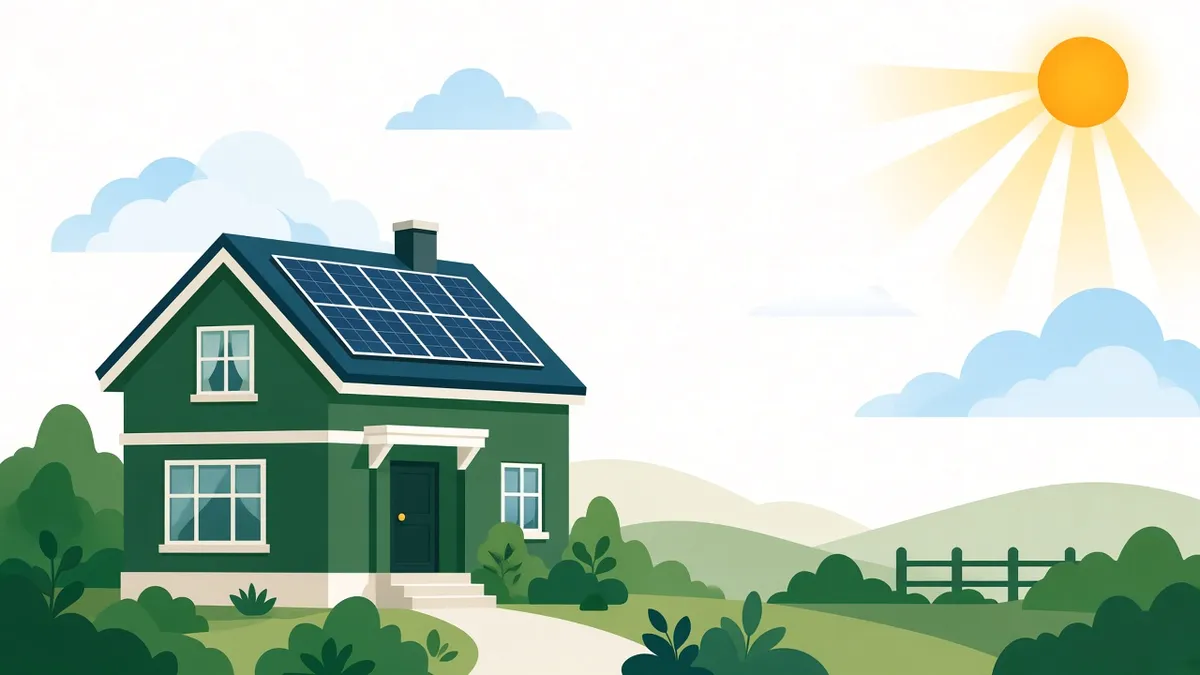
The world of green technology and how systems such as solar panels work can be a little confusing. However, with a little understanding of the workings behind environmentally friendly technology, you may come to realise that an eco-friendly addition to your lifestyle, such as solar panels for your home, could be something in which you are interested in investing.
The basic workings of Solar Panels
Solar Photovoltaic Panels are normally fitted to the roof of your property, but they can also be mounted freestanding. Each frame is made up of a number of photovoltaic panels (‘photo’ refers to light and ‘voltaic’ refers to electricity), much in the same way as solar cells on a simple calculator would work. During daylight hours, solar panels generate direct electrical current (DC), which flows into an inverter to convert the energy generated into alternating current (AC), which is the power supply used by the appliances in all of our homes.
What conditions are best for generating electricity?
Now you may be wondering whether your home’s solar panels will only generate electricity during bright sunny periods, but rest assured that while they do work best in direct sunlight, they will still trap the sun’s energy when it’s overcast, as they use daylight, not heat. In actual fact, a certain amount of rain is beneficial to the photovoltaic system as the cells are self-cleaning using the rainfall, and will allow more sunlight through once the layers of dust that can accumulate on the panels is washed away. The solar panels also contain a Generation Meter which will advise you at a glance how much energy they are generating.
]]>
Powering your home
The alternating current will flow from the inverter to your home’s fuse box. This will then power any electricity that you’re using at the time, to run your normal household appliances such as your kettle, TV or computer. If the solar panels installed in your home are not providing enough electricity to power your devices, a top up will be provided by the national grid. Similarly, if your solar system is generating more energy than your household requires, it flows directly into the national grid to be used by other consumers.
All of the above means that solar panels for your home effectively turn your house into a miniature power station. As well as saving on your electricity bills, there is also the positive Government incentive scheme of Feed in Tariffs which was introduced in 2010. In a bid to encourage the installation of domestic solar panels, the Government scheme will pay a fee for each KWh generated, even if your house is using that energy itself. This can mean that solar panels for your home substantially reduce your electricity bills and create year on year savings.
Getting more advice
If you are interested in solar panels for your home, a reputable solar installer who is accredited under the Microgeneration Certification Scheme should be able to bust the jargon and explain the electricity generating process in simple terms, allowing you to make the most of green technologies and to reduce your carbon footprint alongside your electricity bills.
SunSolagy is a friendly company specialising in solar installations. MCS accredited solar installers can install your solar power system from just £6500. Give SunSolagy a call today on 0800 644 6100 or visit http://www.sunsolagy.co.uk for more information and a FREE no obligation survey. SunSolagy is also a member of the REAL Assurance Scheme.
Article from articlesbase.com